
“Weeds Took Over, But We Will Plant Again”:
Restoring Hope for Farmers in Kyselivka
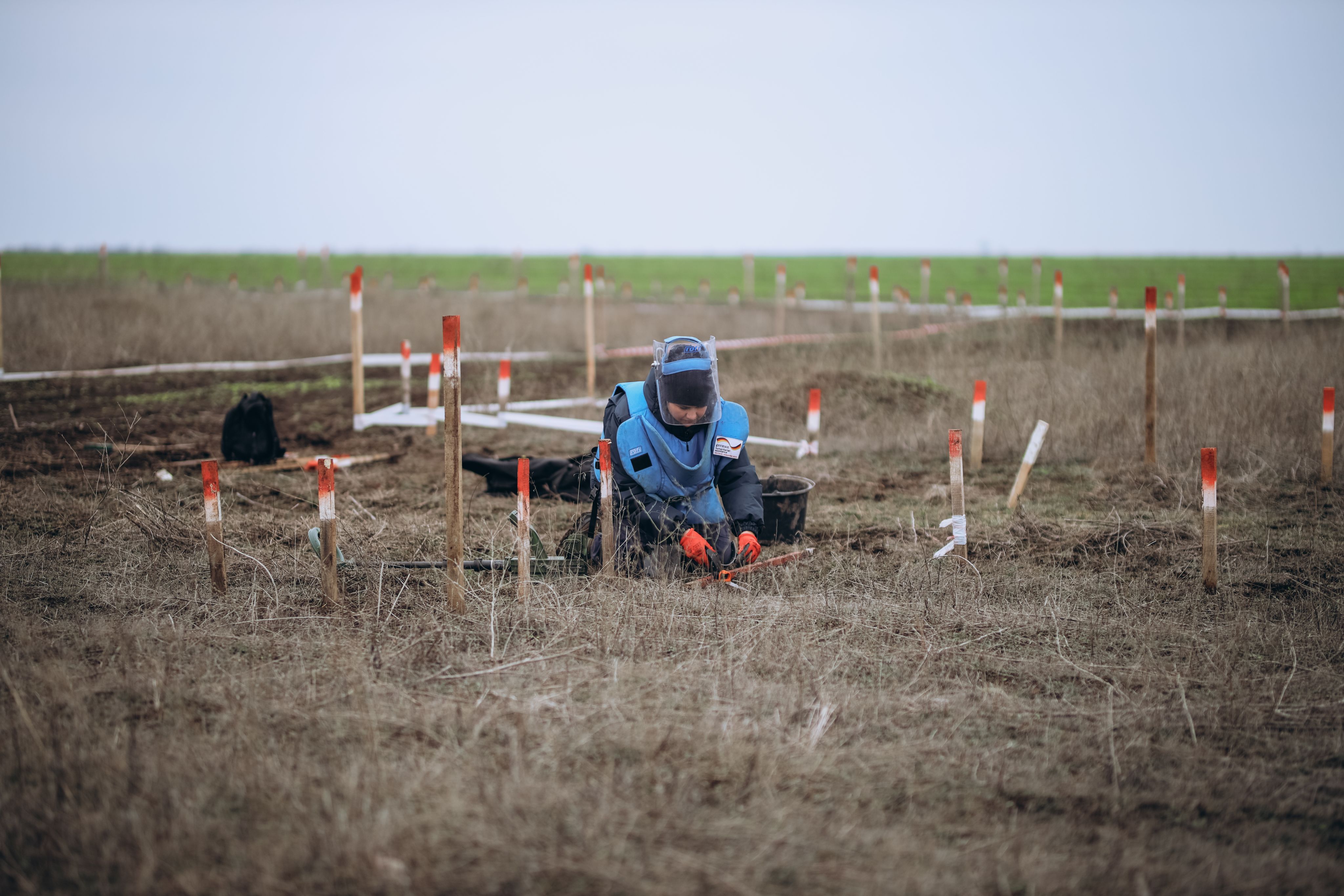

In the quiet village of Kyselivka, nestled in the Mykolaiv region, Serhii Volotkovych has spent his entire life cultivating the land he calls home, even though he now lives with his family in the city of Mykolaiv, just a short distance away.
A farmer for 23 years, Serhii’s connection to the land runs deep. “I grew up here in Kyselivka, I finished school here, and my whole life has been spent here,” he says. The land, once part of collective farms, was redistributed after the Soviet collapse, and Serhii has been cultivating wheat, sunflowers, corn, and peas ever since. His farm, like many others in the village, thrived on a strong sense of community, where neighbours helped each other repair machinery, share resources, and bring in the harvest together. Even in difficult times, this spirit made Kyselivka a good place to live and farm.
But everything changed on 24 February 2022. That morning, as Serhii was preparing for a day’s work in his farm workshop, Russian fighter jets struck Kulbakine, a Ukrainian air base near Mykolaiv. The sudden escalation of hostilities forced him to shut everything down and rush back to the city to get his wife and three young children and take them to another village in a safer area.
As Russian forces advanced, Serhii’s farm was caught in the devastation. His farm workshop was taken over by Russian soldiers, his equipment destroyed, and his supplies looted. “The Russians settled in my workshop,” he explains. “They ripped out gates, stole fuel, and even took my tractor. When I found it later, it was damaged and unusable.” But the war’s toll extended beyond the land and material losses — many villagers fled, and some never returned. Serhii mourns the loss of neighbours and community members, some killed in airstrikes, others missing:
“These were people I worked with, and their absence is deeply felt”
- Serhii Volotkovych

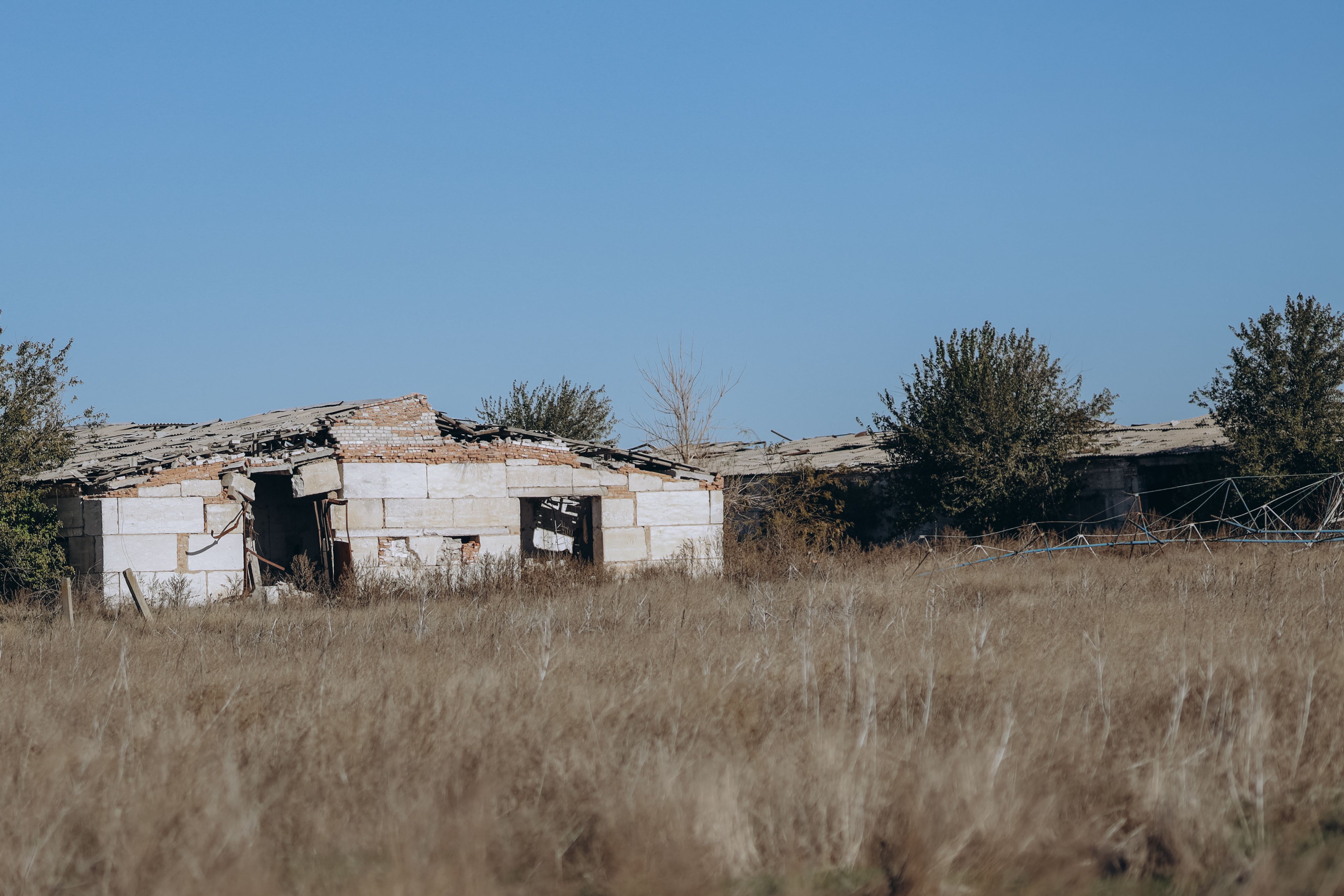
A partially destroyed warehouse on Serhii’s farmland
A partially destroyed warehouse on Serhii’s farmland
Despite the losses, Serhii remained resolute. Once the area was liberated, he began the slow process of rebuilding his farm and planting wheat and barley on the few parts of his land that were safe. However, a significant barrier to recovery is the presence of landmines and other explosive remnants of war.
To address the explosive ordnance contamination, Norwegian People’s Aid (NPA), supported by the German Federal Foreign Office, started manual demining operations in Kyselivka village in July 2023, with mine-detection dogs added in May 2024 and mechanical support the following month. In October 2024, the teams completed the clearance of a site containing a part of Serhii’s land, with work on other parts still ongoing. From the completed site, more than 50,000 m² of land was released and returned to Serhii. NPA’s clearance teams found 61 items of explosive ordnance on the land, including 53 anti-vehicle mines and 8 abandoned explosives. All items were safely removed and handed over to the State Emergency Service of Ukraine for destruction.
Mine clearance is vital not just for Serhii’s farm but for the entire country. It is a crucial step in the social and economic recovery of Ukraine, helping communities return to their homes and rebuild their lives. Tetiana, a deminer and 37-year-old mother of two boys, is part of the effort to clear land in Kyselivka, including Serhii’s fields.
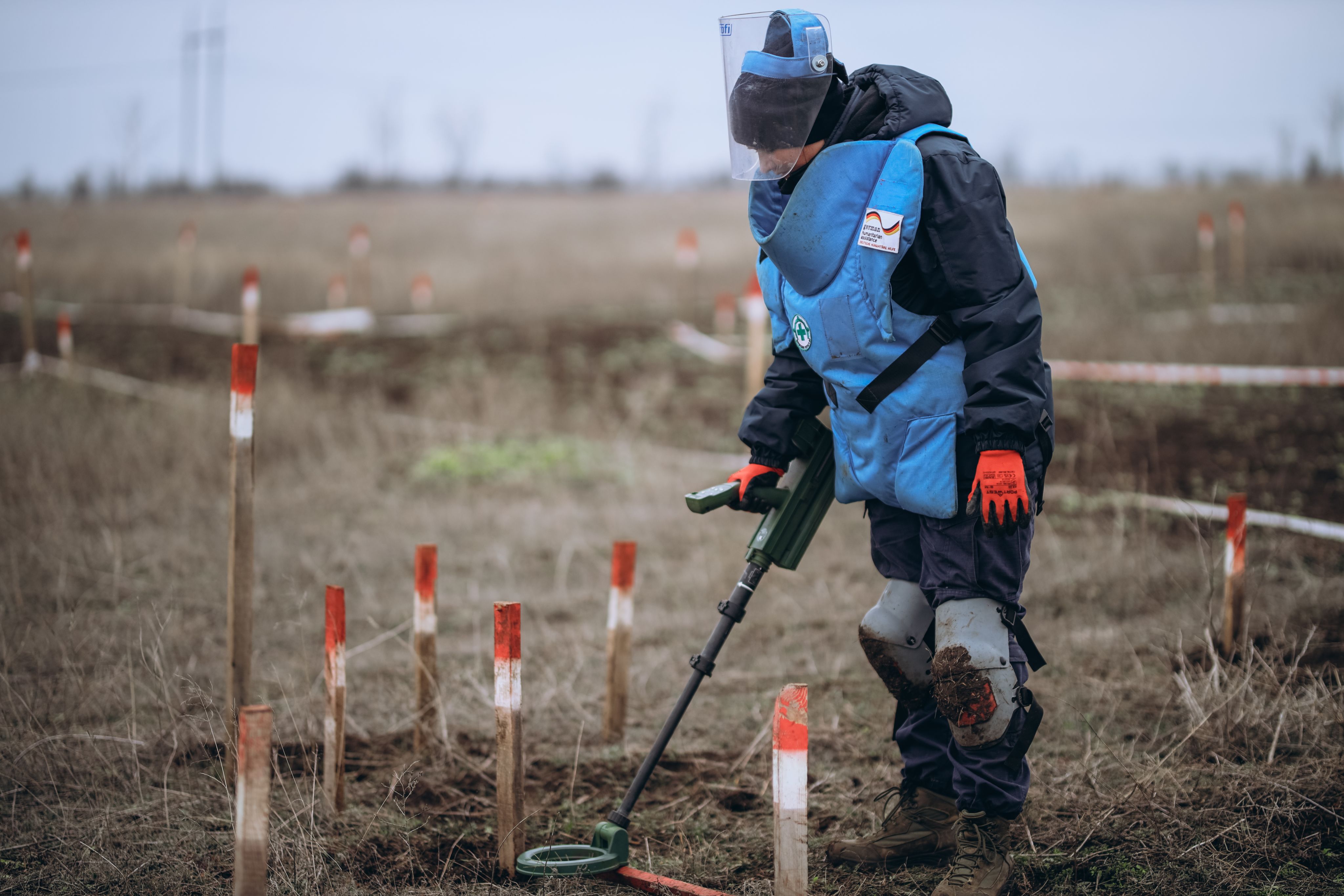
A deminer conducts clearance on a minefield in Kyselivka that includes parts of Serhii’s farmland
A deminer conducts clearance on a minefield in Kyselivka that includes parts of Serhii’s farmland
For her and many other NPA staff, the work is deeply personal — it is about restoring safety and stability to Ukraine. This is highlighted by Tetiana, who says:
“I want to do something useful, to make a difference. I’m helping by clearing the fields, demining. It feels a bit like volunteering. I want my children to live on cleared land, in a safe country.”
- Tetiana Kashpurenko
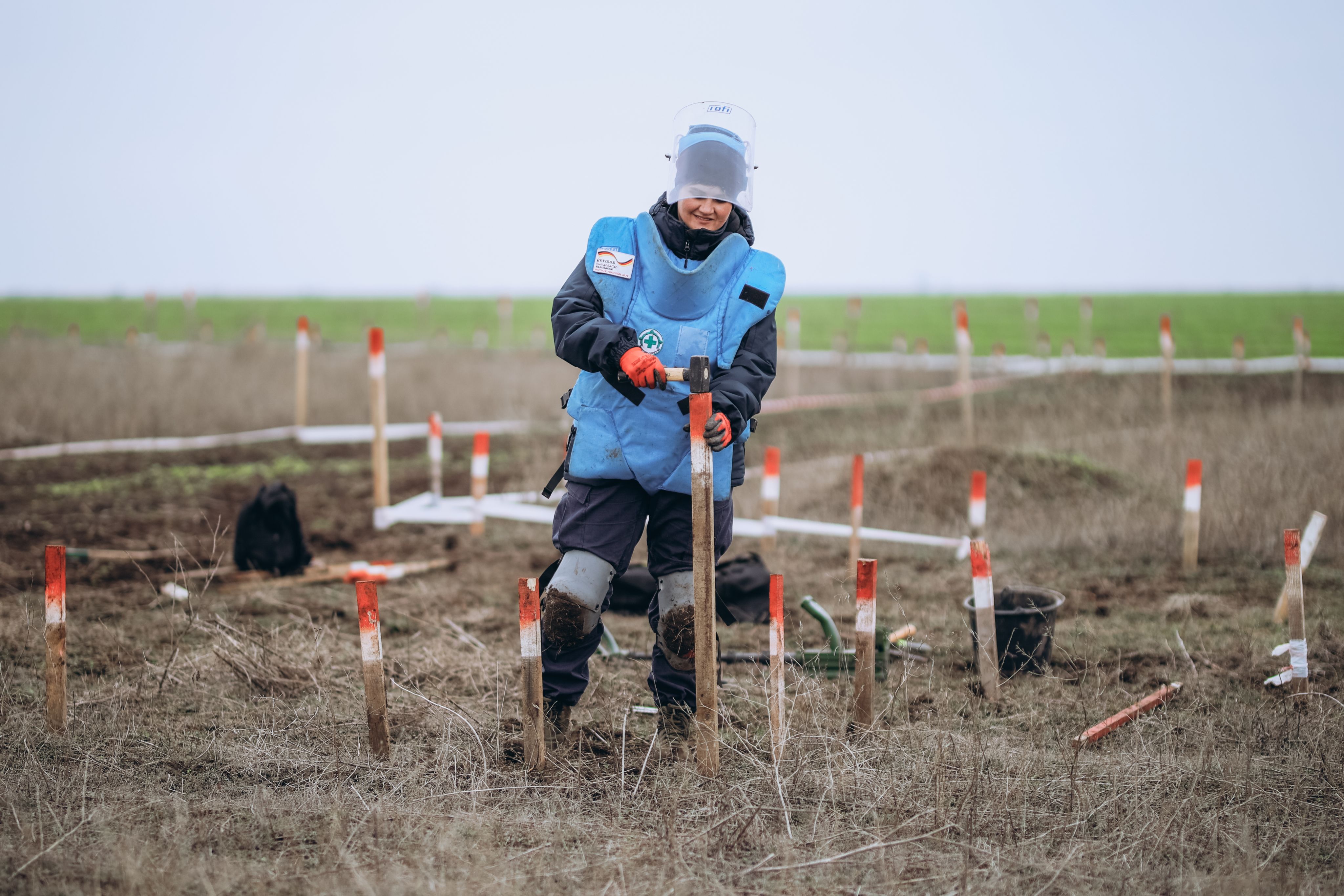
Tetiana marks a cleared area on a minefield in Kyselivka
Tetiana marks a cleared area on a minefield in Kyselivka
Tetiana and her colleagues continue their work, knowing that their efforts are crucial to helping families return to their land and rebuild their lives. For Serhii, that reality is already taking shape. With safe land now available, he is already preparing for the next planting season. He plans to cultivate wheat and barley on the cleared fields, gradually restoring his farm’s productivity.

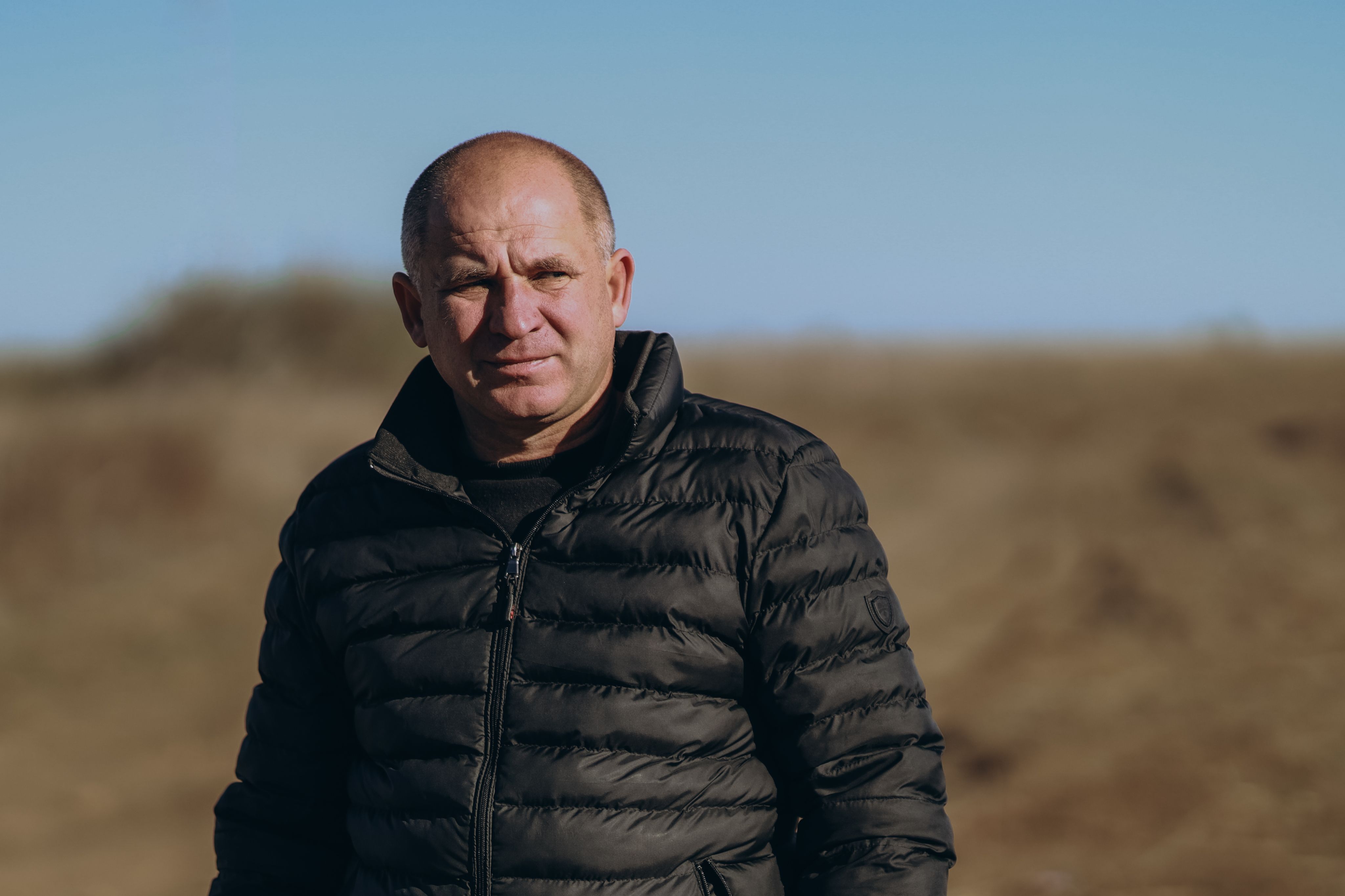
Portrait of Serhii as he looks out over his cleared land
Portrait of Serhii as he looks out over his cleared land
“Weeds took over, but we will plant again,” Serhii states, determined to rebuild what was lost. The demining efforts in Kyselivka, made possible thanks to German support, have given him a chance to work his land without fear. While challenges remain, each cleared hectare is a step toward recovery — not just for his family, but for the entire village, where more farmers are hoping to follow the same path back to their fields.

NPA thanks the German Federal Foreign Office for supporting survey and clearance operations in Kyselivka and other villages in Mykolaiv region.
 Built with Shorthand